
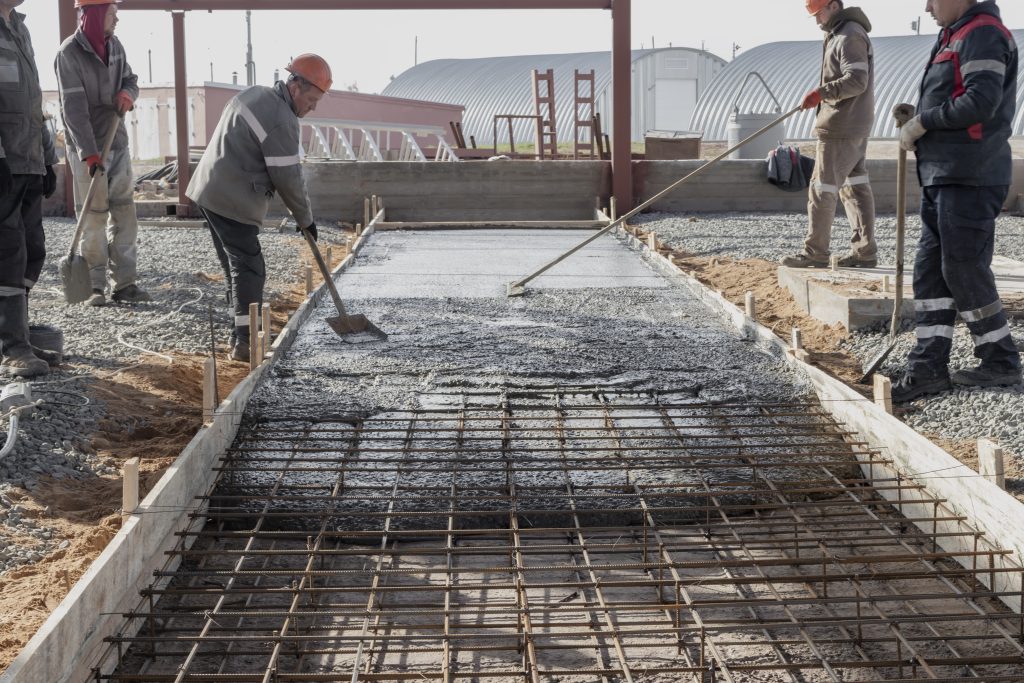
Power loom sheds in Sachin, Pandesara and Kadodara run machines around the clock on floors that were often laid quickly and never designed for years of vibration. Cracked, hollow and sunken floors slow down production, damage trolleys and make machine alignment harder. This guide explains why loom shed floors fail, which repair options exist, and how to repair them in phases while the unit keeps running.
Why loom shed floors fail
Most floor failures in loom sheds come from a few repeating causes:
- Weak or poorly compacted sub-base. If the soil and filling under the floor were not compacted in layers, the floor settles unevenly over time, especially under heavy loom lines.
- Continuous vibration. Looms transfer vibration into the slab. Thin floors without proper joints crack along random lines instead of at planned joints.
- Thin topping over old floors. Many sheds have had a new screed laid over an old cracked floor. The topping debonds and sounds hollow when tapped.
- Water ingress. Leaking roofs, washing water and blocked drains soften the sub-base and accelerate settlement.
- Trolley and forklift wheels. Small hard wheels concentrate load and break edges at joints and cracks.
Inspect before you choose a repair
Before quoting, the floor should be mapped: which bays have hairline cracks, which sound hollow, where the floor has sunk, and where water collects. A simple tap test with a hammer shows debonded areas. Levels taken across the bay show settlement. Where settlement is significant, a few trial pits reveal whether the sub-base itself has failed.
This mapping decides the method. Treating a settled sub-base with a surface coating only hides the problem for a season.
Repair options, from light to heavy
- Crack routing and sealing for stable hairline cracks, so dust and water stop entering.
- Patch repairs for broken joint edges and small potholes, cut back to sound concrete with square edges before filling with a suitable repair mortar.
- Removing debonded topping and laying a new bonded topping where the base slab is sound but the screed is hollow.
- Full-depth replacement of bays where the sub-base has failed: break out, re-compact the sub-base in layers, and cast a new slab with planned joints.
- Machine foundations for heavy or high-vibration machines, isolated from the general floor where the machine supplier recommends it.
Phasing repairs around running looms
A full shutdown is rarely possible. A practical phasing plan usually works like this:
- Divide the shed into bays or loom lines and agree an order with the production manager.
- Shift or stop only the looms in the active bay. Protect neighbouring machines from dust and slurry with sheets.
- Schedule breaking work for low-production hours or weekly offs.
- Allow curing time before reloading the bay. Fast-setting materials can shorten this, but cost more, so use them only where downtime is expensive.
- Keep a clear, marked route for material and debris so production movement is not blocked.
What your quotation should state
Ask for the area of each repair type, the thickness of new concrete or topping, the concrete grade or repair material, joint layout, curing period per bay, and who shifts machines. A per-square-foot rate without these details makes quotations impossible to compare.
Frequently asked questions
Can a loom shed floor be repaired without stopping the factory?
Yes, in most cases. The shed is repaired bay by bay so that only the looms in the active area stop, while the rest of the unit keeps running.
Is an epoxy coating enough for a cracked loom shed floor?
Only if the floor below is sound. A coating over a hollow or settled floor will crack again. The base must be repaired first.
How long before looms can go back on a repaired floor?
It depends on the material. Conventional concrete needs a proper curing period, while fast-setting repair materials can return an area to use sooner. Agree this in the quotation.
Need help with this on your site?
Siddh Sai Corporation has carried out industrial construction and renovation in Surat, Sachin GIDC and nearby areas for over 30 years. Call +91 73593 59310 or WhatsApp your site photographs for a site visit and a line-item estimate.